
Omani cuisine tells a story of land, sea, and trade. The food is a direct reflection of the country’s geography and history. Coastal areas provide fresh fish, while the interior’s date plantations and farms supply meat, grains, and fruit. Centuries of maritime trade brought spices from India, East Africa, and beyond. This blend created a unique and flavorful traditional Omani food culture. For visitors, understanding this cuisine is a key to understanding Oman itself. This guide explains the most popular dishes, the customs around eating, and where to find authentic flavors.
What is Traditional Omani Food?
Traditional Omani food is hearty, aromatic, and designed for sharing. It is not defined by extreme heat but by a deep, warm spice profile. Meals often center on a main dish of rice, meat, or fish, accompanied by salads, broths, and fresh bread. The cuisine makes excellent use of local ingredients like dates, limes, and kingfish. Every meal is an expression of the Omani values of generosity and community.
The cultural significance of Omani cuisine
Food is central to Omani social life and hospitality. Offering food to a guest is a fundamental duty. Meals are communal events, often eaten from a shared platter. This practice strengthens family and community bonds. Special occasions like Eid and weddings feature specific traditional Omani food like Shuwa. The preparation of these dishes is a community effort, sometimes taking days. This shared work is as important as the eating. You can learn more about the history of Gulf trade routes and their culinary impact through resources from UNESCO.
Key ingredients and flavor profiles
Omani cooking uses a specific set of core ingredients. Long-grain basmati rice is the staple for most main dishes. Meat choices are usually chicken, lamb, or goat. Fish, especially kingfish (hamour), sardines, and tuna, is vital in coastal regions. The flavor comes from a blend of spices. Key ones include black lime (loomi), which adds a tangy, earthy depth, cardamom, turmeric, cumin, and cinnamon. Saffron and rose water are used for color and fragrance in rice and desserts. Fresh herbs like coriander and mint are common garnishes.
Must-Try Traditional Omani Dishes
To experience traditional Omani food, you must try its cornerstone dishes. These recipes have been passed down for generations. They represent the heart of Oman food culture. Each dish has a specific place, whether for daily meals, Friday family lunches, or grand celebrations.
Shuwa: Oman’s festive slow-cooked lamb
Shuwa is the most celebrated traditional Omani food. It is reserved for major holidays like Eid al-Fitr and weddings. The process is an event. A whole lamb or large cuts are marinated in a fiery red paste of chili, garlic, cumin, coriander, and vinegar. The meat is wrapped in banana or palm leaves. It is then placed in an underground sand oven, called a *tanour*, and slow-cooked for up to two days. The result is incredibly tender, smoky meat that falls off the bone. It is a true taste of Omani tradition.
Majboos: The national rice dish of Oman
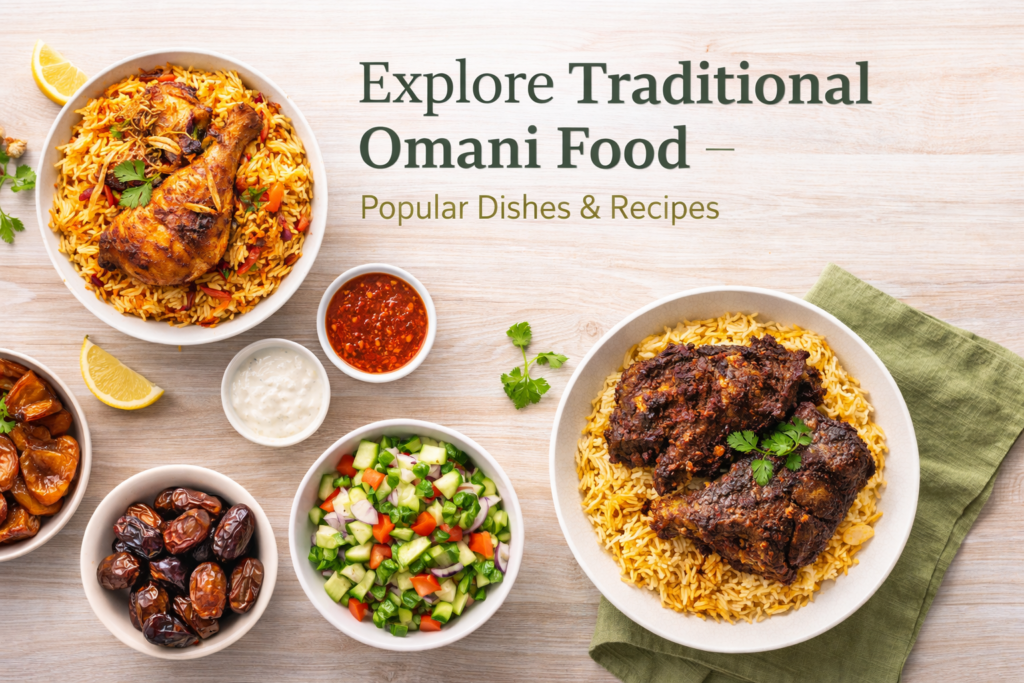
Majboos (or Machboos) is the national dish and a weekly staple in Omani homes. It is a fragrant one-pot rice dish. Chicken, lamb, or fish is first browned with spices like black lime, cardamom, and baharat (a spice blend). Rice and water or broth are added, and everything steams together. The rice absorbs all the rich flavors and often turns a yellow color from turmeric or saffron. It is garnished with fried raisins, nuts, and fresh coriander. This is the definitive traditional food Oman offers on a daily basis.
Mashuai: Succulent whole roasted kingfish
Mashuai is a coastal specialty, showcasing Oman’s excellent seafood. A whole kingfish (hamour) is marinated with lime and spices, then roasted or grilled. The key accompaniment is a special lemon rice. This rice is cooked separately with whole spices and a distinct, tangy sauce made from lemon juice. The flaky, moist fish paired with the sharp, flavorful rice creates a perfect balance. It is a must-try in Muscat and along the Al Batinah coast.
Harees: A comforting wheat and meat porridge
Harees is a beloved dish, especially during the holy month of Ramadan. It is a simple, nourishing porridge made from cracked wheat and meat—usually chicken or lamb. The two ingredients are cooked together for many hours until they blend into a smooth, thick consistency. It is seasoned with salt, cumin, and sometimes cinnamon, then topped with ghee. Its mild flavor and soft texture make it a comforting traditional Omani food for breaking the fast.
Popular Street Food and Snacks in Oman
Beyond the main dishes, Oman food culture has a vibrant street food scene. These snacks are perfect for eating on the go while exploring souqs or the corniche. They are affordable, delicious, and give a quick insight into local tastes.
Mishkak: Omani-style grilled meat skewers
Mishkak is Oman’s popular street barbecue. Bite-sized pieces of marinated chicken, beef, or lamb are skewered and grilled over charcoal. The marinade is a simple mix of spices, lemon, and sometimes tamarind, giving the meat a sweet and smoky char. You will find vendors grilling these skewers in the evening at roadside stalls and markets. They are often served with a side of plain bread or a spicy sauce.
Halwa: Oman’s iconic sweet gelatinous dessert
Omani Halwa is a national treasure. This sweet is a sticky, gelatinous confection made from sugar, rose water, ghee, and starch. It is flavored with cardamom and saffron and often contains nuts like cashews or almonds. The cooking process is slow and requires constant stirring in large copper pots. It has a unique, dense texture and a fragrant, sweet taste. Halwa is always served with Kahwa (Omani coffee) as a gesture of welcome.
Dates and Kahwa: The traditional Omani welcome
No discussion of traditional Omani food is complete without this pairing. Offering dates and Kahwa is the fundamental act of Omani hospitality. The coffee is lightly roasted, ground with cardamom, and served unsweetened in small delicate cups. The bitter coffee is balanced by eating a sweet, soft date first. This ritual happens in homes, offices, and even some shops. Accepting this offering is a sign of respect and friendship.
The Cultural Etiquette of Omani Dining
Understanding how to eat is as important as knowing what to eat. Omani dining customs are rooted in Islamic tradition and Bedouin hospitality. Following these simple rules shows respect for the local culture and enhances your experience.
How traditional Omani food is served
Traditional meals are served on a large, shared platter placed on the floor or a low table. People sit around it, often on cushions. The main rice dish, like Majboos, is in the center. Side dishes like salad (salata), yogurt (laban), and broth (shorba) are placed around it. Bread, like Omani flatbread (khubz rakhal), is used to scoop up food. It is customary to eat with your right hand only, using your fingers to form small balls of rice and meat.
Understanding Omani hospitality and customs
Omani hospitality is generous and sincere. If you are invited to a meal, it is polite to accept. Before eating, you may be offered a bowl and jug to wash your hands. Wait for the host to indicate where to sit and when to begin eating. Always use your right hand for eating and passing dishes. It is considered good manners to try a bit of everything. Leaving a small amount of food on the platter indicates you are satisfied; finishing it all might prompt the host to offer more.
Dining tips for tourists and visitors
For tourists, the rules are more relaxed in restaurants, but knowing basics helps. Dress modestly when going out to eat. In local restaurants, you may still find shared seating. Do not point the soles of your feet at the food platter or other people. When eating with hands, use only your fingertips. If you are not comfortable eating with your hands, it is acceptable to ask for a spoon. Since you will likely do a lot of walking in souqs and old towns, wearing comfortable and respectful footwear is important. A pair of classic Mary Jane Shoes can be a good choice, offering both comfort for walking and a modest, polished look suitable for the cultural setting.
Where to Find Authentic Omani Food
Finding genuine traditional Omani food requires knowing where to look. While international cuisine is available in hotels, seeking out local spots provides a richer experience.
Best restaurants for traditional food in Muscat
In Muscat, several restaurants specialize in Omani cuisine. Bin Ateeq is a popular local chain with multiple branches, offering a wide range of classic dishes in a traditional setting. Kargeen Caffe in Madinat Qaboos is famous for its atmospheric outdoor seating and extensive menu of Omani and Middle Eastern food. Bait Al Luban, located in an old house in Muttrah, offers a fine-dining take on traditional food Oman is known for, with beautiful views of the harbor.
Experiencing Omani food at local souqs
Souqs are the best place for street food and snacks. Muttrah Souq in Muscat has stalls selling fresh juices, Omani halwa, and dates. Nizwa Souq, especially on Friday mornings, is an incredible experience. You can find vendors selling freshly made Omani bread, local honey, and spices. You can also try simple, cooked dishes from small eateries within the market. The atmosphere is as much a part of the meal as the food.
Attending a traditional Omani feast
For the ultimate experience, try to attend a traditional feast. Some tour operators can arrange visits to an Omani family home for a meal. During Eid, some community organizations host large public feasts. Resorts and desert camps often put on “Omani Nights” with buffet spreads featuring Shuwa, Majboos, and live cooking stations. This is a great way to sample many dishes at once in a festive environment.
Common Questions About Omani Cuisine
Visitors often have specific questions about traditional Omani food. Here are clear answers to some of the most common queries.
Is traditional Omani food spicy?
Omani food is not typically “hot” spicy like some Asian cuisines. It is deeply spiced, meaning it uses many aromatic spices like cardamom, cumin, and turmeric. The heat level is usually mild to moderate. Chili is used, especially in dishes like Shuwa, but it provides warmth rather than intense burn. Side sauces or fresh green chilies are often provided for those who want extra heat.
What are the dietary considerations?
Omani cuisine is heavily based on meat, rice, and wheat. Finding vegetarian options can be challenging in traditional restaurants, but it is possible. Dishes like lentil soup, bean stews (like *foul*), vegetable salads, and some rice dishes without meat may be available. Always ask. For gluten-free diets, rice-based dishes like Majboos (without bread) and grilled meats are safe choices. Due to Islamic law, pork is never used, and alcohol is not served with meals.
How does Omani food differ from other Gulf cuisines?
Omani cuisine has its own distinct character. Compared to Emirati or Qatari food, Omani dishes often have a more pronounced use of black lime and dried fish (like in *saloona* broth). Its coastal location means seafood plays a larger role. The influence of East Africa and Zanzibar (once part of the Omani empire) is also visible, especially in the use of coconut and certain spicing methods. While sharing common elements like rice and lamb, the traditional Omani food flavor profile is uniquely its own.
Bringing Omani Flavors to Your Kitchen
You can recreate the taste of Oman at home. The key is in the spice blend and the cooking technique. Start with a few essential ingredients and a simple recipe.
Essential spices for Omani cooking
To cook traditional Omani food, you need a basic spice kit. The most important is **loomi (black lime)**. This is a dried lime that is boiled and then sun-dried. It is used whole or ground. Other essentials include cardamom pods (green), whole cloves, cinnamon sticks, cumin seeds, coriander powder, and turmeric powder. A ready-made *baharat* blend from a Middle Eastern store is also very useful. Saffron threads are used for special rice dishes.
A simple Majboos recipe to try at home
Majboos is a great dish to start with. Here is a simplified version for chicken Majboos. You will need: chicken pieces, basmati rice, onion, garlic, tomato paste, black lime (loomi), cardamom, cloves, cinnamon, turmeric, baharat, salt, and oil. First, brown the chicken and set aside. In the same pot, fry sliced onions until soft. Add garlic, tomato paste, and all the dry spices (2 cardamom pods, 3 cloves, 1 cinnamon stick, 1 tsp each of turmeric and baharat, and 1 pierced black lime). Stir for a minute. Add the chicken back with water, cover, and simmer for 25 minutes. Remove the chicken, add soaked rice to the broth, and cook until the rice is done. Serve the rice with the chicken on top, garnished with fried raisins and almonds. For detailed measurements and steps, refer to an authentic recipe from a source like BBC Good Food.
Conclusion
Traditional Omani food is a direct path to understanding the country’s soul. It is a cuisine of generosity, history, and community. From the festive slow-cooked Shuwa to the daily comfort of Majboos and the welcoming ritual of dates and coffee, each element has meaning. By trying these dishes and observing the dining customs, you engage with Omani culture on a fundamental level. Whether you are eating at a street stall in Nizwa or attempting a recipe at home, you are participating in a rich and flavorful tradition.
Frequently Asked Questions About Omani Food
What is the most famous traditional Omani food?
The most famous traditional Omani food is Shuwa. It is the centerpiece of major celebrations. Its unique underground cooking method and complex spicing make it iconic. For everyday fame, Majboos is considered the national dish and is the most commonly eaten traditional food Oman prepares in homes.
What time is dinner typically served in Oman?
Dinner is typically served late in Oman. It is common for families to eat between 8:30 PM and 10:00 PM. This is especially true during the hotter months when people wait for the temperature to drop. Lunch is the main meal of the day for many, often eaten after the Friday noon prayers.
Is alcohol served with traditional Omani meals?
No, alcohol is not served with traditional Omani food. Oman is an Islamic country, and the sale and public consumption of alcohol are restricted. Traditional meals are accompanied by water, laban (yogurt drink), soft drinks, or the non-alcoholic welcome drinks of Kahwa (coffee) and dates. Alcohol is only available in licensed hotel bars and restaurants.
Explore More Cultural Style Guides
If you enjoyed this guide to traditional Omani food and culture, you might be interested in learning about other aspects of regional dress and etiquette. Understanding local customs, from clothing to greetings, can greatly enrich your travel experience in the Gulf and beyond.